

Viriksha HR Solution
HR Outsourcing Services: A Complete Guide for Business Owners in India
15-06-2026 Monday
Table of Contents
ToggleHR Outsourcing Services: A Complete Guide for Business Owners in India
Running a business in India means managing a workforce — and managing a workforce means managing everything that comes with it. Payroll that must be processed accurately every month. Statutory filings that must reach EPFO, ESIC, and state authorities before fixed deadlines. Labour law registers that must be maintained in prescribed format. Employment documents that must be legally compliant. Hiring that must produce the right people at the right time. HR policies that must reflect current law and be communicated to every employee.
For most business owners, this is too much to manage well alongside everything else that running a business requires. Not because they are incapable — but because HR is a specialist discipline that spans payroll accounting, labour law, statutory compliance, recruitment, and people management simultaneously. No single internal hire covers all of it. No informal process manages all of it reliably as the business grows.
HR outsourcing services exist to solve this — completely, professionally, and at a cost that is almost always lower than building the equivalent internal capability.
This guide covers everything a business owner in Chennai and across India needs to know about HR outsourcing services — what they include, what they cost, who needs them, how to choose a provider, and how Viriksha HR Solutions delivers them.
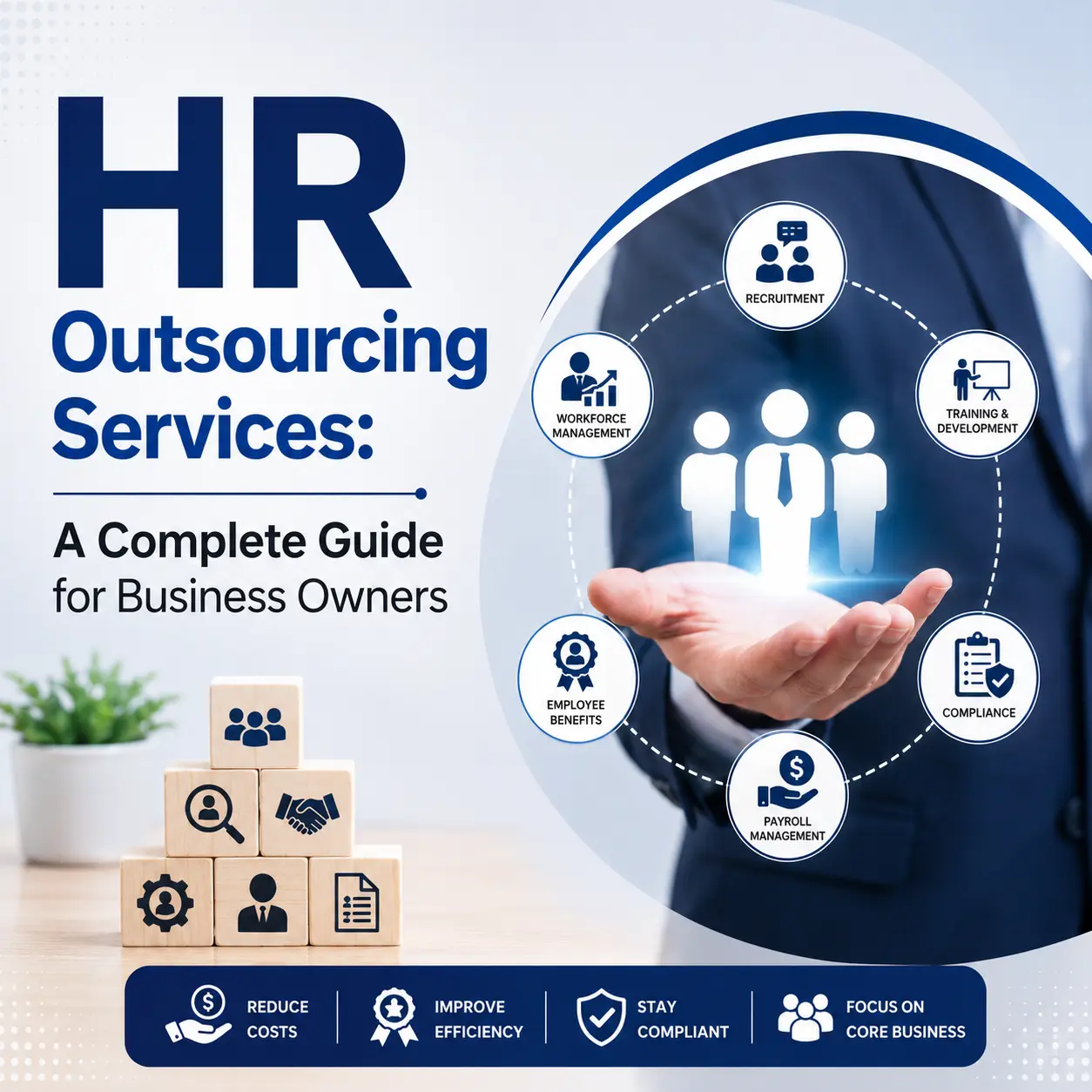
What Are HR Outsourcing Services?
HR outsourcing services is the engagement of an external specialist firm to manage some or all of a business’s human resources functions — instead of building and maintaining that capability entirely in-house.
HR outsourcing is not a new concept. Large enterprises have used it for decades — outsourcing payroll processing to specialist vendors, engaging recruitment firms for specific mandates, and bringing in HR consultants for specific projects. What has changed in India in 2026 is the breadth and integration of what can be outsourced, the quality of specialist providers who serve businesses of every size, and the recognition among growing businesses that partial HR outsourcing — doing some things internally and outsourcing the rest — frequently produces the worst of both models.
The most effective HR outsourcing engagement for a growing business is one that covers the complete HR function — payroll, compliance, recruitment, staffing, documentation, and advisory — through a single integrated provider who owns every output and is accountable for every outcome.
What HR Outsourcing Services Include — The Complete Scope
HR outsourcing is not a single service. It is a collection of related functions that can be outsourced individually or together. Here is what a complete HR outsourcing services engagement covers.
Payroll outsourcing is the most commonly outsourced HR function — and for good reason. It is technically demanding, deadline-driven, and directly connected to statutory compliance obligations that carry real penalties when missed.
A complete payroll outsourcing service covers attendance data collection and reconciliation, gross salary calculation for every employee, application of all statutory deductions — Provident Fund, Employee State Insurance, Professional Tax, Labour Welfare Fund, and TDS under Section 192 — payslip generation and distribution, bank transfer file preparation, statutory filing and remittance for all applicable contributions, and a monthly compliance report covering every output and every filing.
Payroll outsourcing also includes statutory register maintenance — the Wage Register, Muster Roll, Leave Register, Overtime Register, Employee Register, and Holiday Register — which most payroll software vendors do not provide but which every labour law inspection requires.
Statutory compliance is the HR function that creates the most significant risk when managed poorly — and the one that most business owners are least equipped to manage themselves. Indian labour law spans more than a dozen central acts and an additional layer of state-specific legislation in every state the business operates in. Each act has its own filing calendar, its own inspection framework, and its own penalty regime.
Statutory compliance outsourcing covers employer registration and licence maintenance under every applicable act — Shops & Establishments Act, Factories Act, Contract Labour Act, ISMW Act, BOCW Act. Monthly compliance management across PF, ESI, Professional Tax, and Labour Welfare Fund — with deadline discipline that ensures no remittance is ever late. Minimum wage monitoring and salary structure updates when revised rates are notified. Statutory register maintenance in prescribed format. POSH compliance management — ICC constitution, policy documentation, annual report filing. And inspection and notice management when any statutory authority visits or issues a demand.
Recruitment outsourcing — from individual role mandates to full Recruitment Process Outsourcing — ensures the business can hire at the speed and quality its growth requires without building the internal recruiter headcount that volume hiring demands.
Recruitment outsourcing covers permanent hiring across every function and level — junior and volume roles through direct sourcing, mid-level specialist roles through a combination of proactive sourcing and agency networks, and senior leadership mandates through retained executive search. It also covers background verification for every placement, onboarding support, and the market intelligence — compensation benchmarking, candidate availability data — that makes hiring decisions accurate rather than approximate.
For businesses with 40 or more annual hires, RPO — Recruitment Process Outsourcing — embeds the recruitment function within the HR team, managing the complete hiring cycle as an integrated service.
Contract staffing outsourcing provides the business with a flexible workforce — contract employees, temporary workers, fixed-term staff, and zero-hour workers — employed and managed by the outsourcing provider rather than directly by the client business.
When the staffing provider is the employer of record, every compliance obligation — PF, ESI, PT, LWF, statutory registers, payroll — is the provider’s responsibility. The client gets the workforce. The provider manages the employment. The compliance exposure is zero.
HR Policy and Documentation Outsourcing
Employment documentation is the compliance component that creates the most legal exposure when poorly managed — and the one that is most commonly neglected because it does not generate monthly filing obligations that are impossible to ignore.
HR documentation outsourcing covers employment contract development and review, HR handbook and policy documentation, POSH policy drafting and ICC documentation, offer letter and appointment letter templates, confirmation, increment, and promotion letter templates, and separation documentation — resignation acceptance, termination letters, and full and final settlement records.
HR Advisory Outsourcing
HR advisory is the function that sits above all the others — providing guidance on workforce decisions, compliance implications of business changes, compensation benchmarking for key hires, and the strategic HR perspective that most growing businesses need but rarely access consistently.
HR advisory outsourcing provides a dedicated HR consultant who understands the business, tracks changes in employment law, advises on people decisions before they become people problems, and is available when a specific question needs a specific answer — without the business having to hire a senior HR professional full-time to access that expertise
Who Needs HR Outsourcing Services — Every Business Size and Stage
Startups and Early-Stage Businesses (Under 30 Employees)
The most common misconception about HR outsourcing is that it is for larger businesses. For startups and early-stage businesses, HR outsourcing is frequently the most important and cost-effective decision available — because it provides the compliance foundation from day one, without the cost of building it in-house.
A startup that engages HR outsourcing services from the point of its first hire gets payroll processed correctly from the first month, PF and ESI enrollments completed before the first salary, statutory registers opened in the right format, and employment documents that are legally compliant from the beginning. This matters enormously when the startup raises a funding round and investors conduct due diligence — because a clean compliance record from day one is significantly easier to demonstrate than a regularised record that required correction.
The cost of HR outsourcing services for a startup with 15 to 25 employees is typically lower than the cost of a part-time payroll executive — and delivers significantly more capability.
Growing Mid-Size Businesses (30 to 200 Employees)
Growing businesses are the segment where HR outsourcing delivers the most visible value — because this is the segment where the gap between the complexity of HR requirements and the internal capacity to manage them is widest.
At 50 employees, payroll has become complex — multiple salary structures, variable pay components, mid-month joiners and leavers, TDS calculations that require monthly revision. At 100 employees, the compliance calendar has grown to include quarterly TDS returns, half-yearly ESI returns, annual Form 16 issuance, annual bonus calculations, gratuity liability provisioning, and ongoing minimum wage monitoring across multiple employee categories. At 150 employees, the HR function is a full-time discipline — and the business that is managing it with one HR executive and a payroll spreadsheet is accumulating compliance risk every month.
HR outsourcing at this stage provides the professional HR infrastructure that the business needs without the cost of hiring the four or five specialist in-house staff who would be required to cover the same scope.
Enterprises and Multi-Location Businesses (200 Employees and Above)
For enterprises operating across multiple locations, HR outsourcing solves the multi-state compliance complexity that is the most significant HR risk for businesses with a Pan India footprint.
Every state has its own Professional Tax rates and slabs, its own Shops & Establishments Act registration requirements, its own minimum wage schedule, its own Labour Welfare Fund contribution framework, and its own labour inspection regime. A business with offices in Chennai, Bangalore, Mumbai, and Hyderabad is operating under four different state compliance frameworks simultaneously — and the compliance team that manages Tamil Nadu correctly cannot automatically apply that knowledge to Karnataka or Maharashtra.
HR outsourcing for enterprises provides state-specific compliance management in every location — with a single point of contact, a unified monthly report, and consistent compliance standards across every office and every workforce.
MNCs and GCC Organisations
MNCs and GCC centres face a specific HR outsourcing challenge — managing India operations from a global HR centre that operates on calendar-year rhythms that do not align with India’s April-to-March financial year compliance cycle, does not understand the specific provisions of Indian labour law, and cannot manage the state-specific compliance complexity of a multi-location India workforce.
HR outsourcing for MNCs provides India-specific compliance management — PF, ESI, PT, LWF, TDS, statutory registers, POSH, and all applicable labour law obligations — managed by a specialist India HR outsourcing provider, integrated with the global HR reporting framework, and available as a single point of contact for all India employment questions.
The Real Cost Comparison — HR Outsourcing vs Building In-House
he most common objection to HR outsourcing is cost. Business owners look at the monthly retainer and ask whether it is cheaper to hire in-house. The honest answer, for most businesses under 300 employees, is no — and the gap is larger than most business owners expect.
Building an equivalent in-house HR capability for a 100-employee business in Chennai requires at minimum: a payroll executive at ₹25,000 to ₹45,000 per month, a compliance manager at ₹40,000 to ₹65,000 per month, a recruitment specialist at ₹30,000 to ₹50,000 per month, and an HR manager to oversee all of the above at ₹60,000 to ₹90,000 per month. Total: ₹1,55,000 to ₹2,50,000 per month — before employer contributions on their salaries, before HRMS and payroll software subscriptions, before the cost of the errors and gaps that even well-intentioned in-house teams produce when managing a function that requires specialisation across multiple domains simultaneously.
A comprehensive HR outsourcing engagement for a 100-employee business typically costs significantly less than the equivalent in-house build — and delivers deeper expertise, broader coverage, and zero accumulated liability from the errors that specialists do not make.
The comparison changes above 300 to 400 employees — at which point a dedicated in-house HR function becomes cost-competitive. Below that threshold, HR outsourcing almost always wins the cost comparison when the full cost of in-house is correctly calculated.
How to Choose an HR Outsourcing Provider — The Seven Questions to Ask
Not every HR outsourcing provider delivers what they promise. These are the seven questions that separate genuine HR outsourcing partners from vendors who process payroll and call it HR outsourcing.
Do you manage all applicable labour laws for my establishment — not just PF and ESI? An HR outsourcing provider who only manages PF and ESI is a statutory filing service, not an HR outsourcing partner. Complete HR outsourcing covers every applicable law — Shops Act, Factories Act, Minimum Wages, Bonus Act, Gratuity Act, Contract Labour Act, POSH Act, and all others.
How do you track and implement regulatory changes — including minimum wage revisions? The right answer is proactive monitoring with client notification and implementation before the effective date. The wrong answer is “we update when you tell us.”
What is your internal deadline for PF and ESI remittance relative to the statutory 15th? The right answer is the 10th — five working days before the statutory deadline. Any answer that references the 15th as the operational target indicates a process that will miss the statutory deadline the first time inputs are delayed.
Do you maintain statutory registers as a standard deliverable — or is it an add-on? Statutory registers must be maintained as standard. Any provider who treats register maintenance as optional or additional is not providing complete HR outsourcing.
How do you handle EPFO or ESIC notices and inspections? The right answer is dedicated liaison capability — document preparation, inspector coordination, and response management through to resolution. The wrong answer is “we will advise you on how to respond.”
Do you provide a dedicated point of contact for our account? A genuine HR outsourcing partner assigns a dedicated account manager or HR consultant to every client. A vendor assigns whoever is available when a query is submitted.
Can you manage payroll and compliance for employees in multiple states? The right answer includes specific state-by-state capability — correct PT slabs, minimum wage rates, and Shops Act compliance in each state. A vague “yes we cover Pan India” without specifics should be followed up with details.
Common HR Outsourcing Mistakes Business Owners Make
The ESI Act provides a comprehensive package of benefits to insured employees and their dependants:
Outsourcing payroll but not compliance
the most common and most expensive HR outsourcing mistake. Payroll and compliance are inseparable. A payroll vendor who processes salary but does not manage statutory registers, minimum wage compliance, or POSH obligations has outsourced the calculation but not the risk.
Choosing the cheapest provider without assessing capability
HR outsourcing quality is not visible until something goes wrong — when a notice arrives, when an inspection happens, when a POSH complaint lands without a functioning ICC. The provider who underprices the engagement is underpricing it for a reason — and the business discovers that reason at the worst possible moment.
Not reviewing the monthly compliance report
HR outsourcing providers who produce monthly compliance reports are providing visibility into what is being managed. Business owners who do not review those reports have no way of knowing whether the compliance is actually being managed correctly. Monthly compliance reports should be reviewed, questions should be asked, and the answers should make sense.
Treating HR outsourcing as a set-and-forget arrangement
HR outsourcing requires an ongoing relationship, not a one-time setup. When the business adds headcount, opens a new location, changes salary structures, or engages contract workers, the HR outsourcing provider must be informed so the scope is updated. Changes that are not communicated create gaps.
Not integrating recruitment with compliance
businesses that outsource payroll and compliance but manage recruitment separately create an onboarding gap — new joiners hired through one process but enrolled in PF and ESI through a separate process, with the timing gaps that come from uncoordinated handovers. Integrated HR outsourcing eliminates this gap.
How Viriksha HR Solutions Delivers Complete HR Outsourcing Services Across Chennai and India
Viriksha HR Solutions is a full-service HR outsourcing provider serving businesses across Chennai, Tamil Nadu, and Pan India — managing the complete HR function for businesses ranging from 15-employee startups to 500-employee multi-location enterprises and MNCs.
Every Viriksha HR outsourcing engagement covers the complete scope — payroll management, statutory compliance, PF and ESI consultancy, recruitment and talent acquisition, contract staffing, HR policy and documentation, and ongoing HR advisory — as a coordinated, integrated function managed by a dedicated HR consultant who owns every output and is accountable for every outcome.
Payroll management — complete monthly cycle including attendance reconciliation, salary calculation, statutory deductions on the correct wage base, payslip generation, bank transfer file, TDS management, and a monthly compliance report. Statutory registers maintained as standard — Wage Register, Muster Roll, Leave Register, Overtime Register, Employee Register, Holiday Register.
Statutory compliance — every applicable law managed — EPF, ESI, Professional Tax, Labour Welfare Fund, Shops Act, Minimum Wages, Bonus Act, Gratuity Act, Factories Act, POSH Act, Contract Labour Act, BOCW Act, ISMW Act where applicable — with a compliance calendar, named ownership for every deadline, minimum wage monitoring, and proactive regulatory change implementation.
PF and ESI consultancy — complete EPFO and ESIC management from enrollment through to inspection support, Section 7A inquiry management, demand notice response, UAN and KYC management, and employee claim assistance.
Recruitment and talent acquisition — permanent hiring across every function and level, RPO for volume requirements, executive search for leadership mandates, background verification, and compensation benchmarking.
Contract staffing — end-to-end contract worker deployment with Viriksha as employer of record — payroll processed before the 5th of every month, statutory filings completed mid-month, all registers maintained. Service charge of 10% to 15% on worker cost.
HR policy and documentation — employment contract templates, HR handbook, POSH policy and ICC documentation, and complete employment documentation for every stage of the employee lifecycle.
HR advisory — dedicated HR consultant, proactive guidance on employment law changes, compliance implications of business decisions, and plain-language answers to every HR question the business faces.
Multi-state compliance — state-specific compliance management in Tamil Nadu, Karnataka, Maharashtra, Telangana, Andhra Pradesh, Delhi NCR, Gujarat, and other states — with correct PT slabs, minimum wage rates, LWF schedules, and Shops Act compliance in every jurisdiction.
For MNCs and GCC organisations — India-specific HR outsourcing integrated with global HR reporting, covering every India compliance obligation from a single point of contact with dedicated India HR expertise.
The business that outsources HR correctly does not just save money relative to building in-house. It gains a compliance record that holds up to any scrutiny, a payroll that runs without error, a hiring function that produces the right people on planned timelines, and the management bandwidth to focus on what the business is actually in business to do.