

Home› Blogs
Viriksha HR Solution
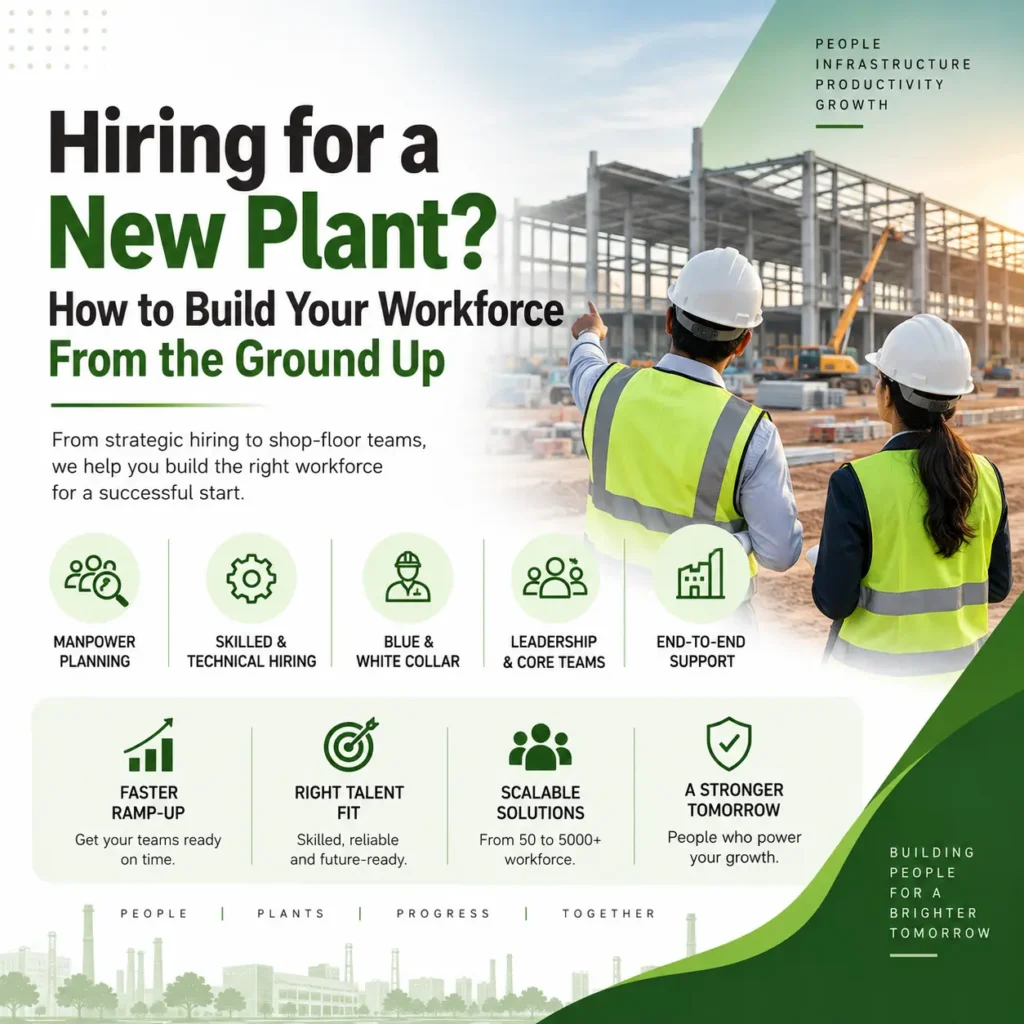
Hiring for a
New Plant?
How to Build Your Workforce From the Ground Up
Your Compliance
Our Responsibility
Our Responsibility
Your Growth
Our Mission
Table of Contents
ToggleHiring for a New Plant? How to Build Your Workforce From the Ground Up
There’s a specific kind of stress that comes with a plant launch date. The construction is on schedule. The machinery is ordered. The layout is finalized down to the last conveyor belt. And then someone in a leadership meeting asks the question that quietly derails everyone’s confidence: “Who’s actually going to run this place?”
New plant workforce planning is where a lot of otherwise well-executed projects lose momentum — not because the building isn’t ready, but because the people aren’t. We’ve sat in enough of these conversations to know the pattern: hiring gets treated as a task for month five or six, right before commissioning, when it should have started around the same time the site broke ground.
If you’re staring down a plant launch and wondering where to even begin on the people side, here’s how we’d think about it.
Why Workforce Planning Can't Wait Until the Building Is Ready
The instinct is understandable. Construction, machinery procurement, and layout planning feel urgent because they’re visible — you can watch a building go up. Hiring feels like something you can compress into a few weeks once the plant is nearly ready.
It can’t, and here’s why. A plant head hired eight weeks before commissioning has no time to build a team, understand the equipment, or influence layout decisions that affect how the floor will actually run day to day. A maintenance team hired in the final month hasn’t had time to train on the specific machinery installed. Quality engineers brought in at the last minute inherit processes they had no hand in designing.
Greenfield plant hiring works best when it runs in parallel with construction, not after it. Leadership and key technical roles should be filled 4–6 months before commissioning. Shop-floor and production roles typically follow 6–10 weeks out, once training schedules and shift patterns are locked in.
Start With the Org Chart, Not the Job Postings
Before a single job description goes out, map the plant’s org structure the way it will actually run at full capacity — not a placeholder structure you’ll “figure out later.” This matters more than it sounds like it should.
A workforce plan for a new plant typically breaks into three layers:
Leadership Layer
Plant head, operations manager, and department heads for quality, maintenance, and production. These are the people who should be in the room during final layout and process decisions — hiring them late means excluding them from decisions they'll have to live with for years.
Technical & Supervisory Layer
Production supervisors, maintenance engineers, quality control engineers, process engineers. This group needs enough lead time to complete equipment-specific training before the plant goes live.
Operator & Shop-Floor Layer
Machine operators, line workers, material handlers. This is usually the largest hiring volume and the one most people default to thinking about first — but it should come after the layers above it, not before, since supervisors need to be in place to help select and train the team reporting to them.
Getting this sequence backwards — hiring operators before supervisors — is one of the most common mistakes we see in plant setup recruitment, and it usually shows up later as inconsistent training and unclear reporting lines in the first few months of operation.
The Hiring Timeline That Actually Works
Here’s a rough sequence we’ve seen work well for a mid-sized manufacturing plant, whether it’s automotive, industrial, or general manufacturing:
6 months out
Plant head and senior leadership hiring begins. These roles have the longest notice periods and the most influence on downstream decisions.
4 – 5 months out
Department heads — quality, maintenance, production — come on board. They begin working alongside leadership on SOPs, staffing structure, and equipment familiarization.
3 months out
Supervisory and technical roles are filled — production supervisors, maintenance engineers, process engineers. Training on plant-specific equipment starts here.
6–10 weeks out
Bulk hiring for operator and shop-floor roles begins, timed so training and onboarding wrap up just before commissioning, not immediately after.
2 – 4 weeks out
Final onboarding, statutory registrations (ESI, PF, professional tax) for the full workforce, and dry-run staffing simulations before go-live.
Here’s a rough sequence we’ve seen work well for a mid-sized manufacturing plant, whether it’s automotive, industrial, or general manufacturing:
What "New Plant Workforce Planning" Actually Means
New plant workforce planning is the structured process of hiring, training, and statutorily onboarding a manufacturing workforce ahead of a new facility’s commissioning date — typically sequenced from leadership and technical roles through to shop-floor operators, run in parallel with statutory compliance registration so the plant can operate legally and functionally from day one.
Common Mistakes in New Plant Hiring
A few patterns we’ve seen repeat across different plant launches:
Starting too late
Compressing months of hiring into weeks leads to rushed screening and higher early attrition.
Hiring operators before supervisors
Leaves the newest and least experienced layer of the workforce without proper onboarding structure.
Treating compliance as a post-hiring task
Creates a legally awkward gap between "workforce hired" and "workforce can be legally paid and reported."
Underestimating local hiring dynamics
Salary benchmarks, notice periods, and talent availability vary significantly by industrial zone — a plant in SIPCOT Sriperumbudur faces different hiring conditions than one in Gummidipoondi, even within the same city.
No dry-run staffing simulation
Skipping a trial run of shift coverage and reporting lines before actual commissioning, which is when structural gaps in the plan usually surface — ideally before go-live, not during it.
How Viriksha HR Solution Supports New Plant Launches
We work with companies setting up plants across Chennai’s industrial corridors — SIPCOT, Guindy, Sholinganallur, Kelambakkam, Vandalur, Tambaram, Chengalpattu, and Pan India — on exactly this sequencing: leadership and technical recruitment first, volume shop-floor hiring second, and statutory registration running in parallel throughout.
Our three-tier screening process and 5 C’s framework (Competency, Character, Chemistry, Culture, Consistency) apply the same way to a single plant head hire as they do to a batch of 50 machine operators — technical fit and team fit assessed together, not just qualification matching.
On the compliance side, we handle ESI and PF company code registration, professional tax setup, and applicable licenses (Shops and Establishment Act, Factories Act where relevant) so a new plant’s compliance readiness tracks alongside its hiring progress rather than trailing behind it.
Frequently Asked Questions
Ideally 4–6 months before the commissioning date for leadership and technical roles, and 6–10 weeks before for bulk operator and shop-floor hiring.
Leadership and technical roles should be hired first, since they influence layout, process, and training decisions that shop-floor hiring depends on.
Yes — ESI and PF company code registration, professional tax, and applicable licenses should be set up in parallel with hiring, not after the workforce is already in place.
Starting workforce planning too late — typically compressing months of leadership and technical hiring into a few final weeks before commissioning.
Yes. Salary benchmarks, notice periods, and talent availability vary by industrial zone, even within the same city, so local hiring expertise matters for accurate timeline planning.
Ready to Stay Compliant?
Let Viriksha HR Solution handle your Professional Tax requirements while you focus on growing your business.