

Healthcare Recruitment Agency in India — Hiring Doctors, Nurses and Medical Professionals
Viriksha HR Solution Healthcare Recruitment Agency in India — Hiring Doctors, Nurses and Medical Professionals A Hospital Without the Right Staff Is a Building, Not a Healthcare Provider Every hospital administrator, clinic owner, and healthcare group director knows this pressure intimately. Patient care does not pause while a critical nursing vacancy stays open. A diagnostic center cannot run at full capacity without the right lab technicians. And a specialist doctor’s resignation can disrupt patient continuity for months if a replacement is not lined up quickly. Healthcare hiring carries a weight that few other industries do — because the cost of a slow or wrong hire is not just operational, it is measured in patient outcomes, regulatory exposure, and institutional trust built over years. Yet most healthcare organizations are still relying on generic job portals or general staffing firms that do not understand medical credentialing, clinical competency assessment, or the urgency that comes with healthcare workforce gaps. This is exactly where Viriksha HR Solutions steps in. As a dedicated healthcare recruitment agency operating across India, we bring deep medical sector understanding to every hiring mandate — for hospitals, clinics, diagnostic centers, and healthcare companies that cannot afford to compromise on talent quality or hiring speed. Explore more Why Healthcare Hiring Demands a Specialized Approach General recruitment firms and medical employment agencies that lack sector depth consistently struggle with healthcare mandates for reasons that are specific to this industry. Credential and License Verification Medical professionals carry registrations, certifications, and licenses that must be verified accurately — MCI/NMC registration for doctors, nursing council registration for nurses, and specialized certifications for allied health roles. Errors here carry legal and patient-safety consequences. Clinical Competency Cannot Be Assessed From a Resume Alone A nurse’s certification tells you what she is qualified to do. It does not tell you how she performs under the pressure of a busy ICU shift. Evaluating real clinical competency requires recruiters who understand healthcare delivery, not just paperwork. Specialization Across an Enormous Range of Roles From general physicians to highly specialized surgeons, from staff nurses to ICU specialists, from lab technicians to hospital administrators — the breadth of healthcare roles requires recruiters who understand the distinct requirements of each. Urgency Is Built Into Every Healthcare Hiring Need A vacant ICU nursing position or an unfilled radiologist role is not a problem that can wait the standard 60 to 90 days most generic hiring processes take. Healthcare hiring requires a recruitment agency that treats every mandate with operational urgency. Viriksha HR’s recruitment team is trained specifically to navigate this complexity — verifying credentials properly, assessing genuine clinical and operational fit, and moving with the speed healthcare hiring demands. Healthcare Roles We Recruit For As a comprehensive healthcare employment agency, Viriksha HR covers the full spectrum of medical and healthcare administrative roles. Leadership and Senior Roles We help you hire: Chief Executive Officer (Healthcare) Chief Medical Officer (CMO) Chief Nursing Officer (CNO) Hospital Director Hospital Administrator Medical Director Clinical Director Director of Nursing Director of Operations – Healthcare Healthcare Operations Manager Quality and Accreditation Manager Healthcare Compliance Manager Healthcare Program Director Regional Healthcare Manager Public Health Director Nursing Roles We help you hire: Chief Nursing Officer Nursing Superintendent Nursing Manager Head Nurse Registered Nurse Staff Nurse ICU Nurse Critical Care Nurse Emergency Room Nurse Operation Theatre Nurse Dialysis Nurse Pediatric Nurse Oncology Nurse Home Care Nurse Infection Control Nurse Nurse Educator Community Health Nurse Allied Healthcare Professionals We help you hire: Physiotherapist Occupational Therapist Speech Therapist Respiratory Therapist Audiologist Dietitian Nutritionist Clinical Psychologist Medical Social Worker Rehabilitation Specialist Prosthetist Orthotist Laboratory and Diagnostic Roles We help you hire: Pathologist Laboratory Director Laboratory Manager Medical Laboratory Technologist Medical Laboratory Technician Microbiologist Biochemist Histopathology Technician Cytotechnologist Phlebotomist Blood Bank Technologist Molecular Diagnostics Specialist As a dedicated nursing recruitment agency, Viriksha HR maintains active pipelines of qualified nursing professionals across general ward care, specialized critical care, and home healthcare settings. Radiology and Imaging Roles We help you hire: Radiologist Radiology Manager Radiology Technician MRI Technician CT Scan Technician Ultrasound Technician Sonographer Nuclear Medicine Technologist Mammography Technician Imaging Specialist Pharmacy Roles We help you hire: Chief Pharmacist Pharmacy Manager Clinical Pharmacist Hospital Pharmacist Retail Pharmacist Pharmacovigilance Specialist Pharmacy Technician Drug Safety Associate Regulatory Affairs Pharmacist Healthcare Administration and Operations Roles We help you hire: Hospital Administrator Medical Administrator Healthcare Operations Executive Medical Records Manager Patient Relationship Manager Front Office Executive Admission Coordinator Insurance Coordinator Healthcare Quality Executive Medical Billing Specialist Medical Coding Specialist Revenue Cycle Manager Medical Coding and Healthcare IT Roles We help you hire: Medical Coder Senior Medical Coder Coding Auditor Medical Coding Trainer Medical Billing Executive Clinical Documentation Specialist Health Information Manager Healthcare Data Analyst Healthcare Informatics Specialist Electronic Health Records (EHR) Specialist Clinical Research and Life Sciences Roles We help you hire: Clinical Research Director Clinical Research Manager Clinical Research Associate (CRA) Clinical Trial Coordinator Clinical Data Manager Drug Safety Associate Pharmacovigilance Officer Regulatory Affairs Specialist Medical Writer Bioinformatics Specialist Biostatistician Research Scientist Public Health and Community Healthcare Roles We help you hire: Public Health Specialist Epidemiologist Community Health Officer Health Educator Public Health Program Manager Health Policy Analyst Disease Surveillance Officer NGO Healthcare Coordinator Specialized Healthcare Roles We help you hire: IVF Specialist Embryologist Perfusionist Dialysis Technician Operation Theatre Technician Cardiac Technician EEG Technician ECG Technician Anesthesia Technician Emergency Medical Technician (EMT) Paramedic Wound Care Specialist Palliative Care Specialist Infection Control Specialist Junior and Entry-Level Roles We help you hire: Junior Doctor Resident Medical Officer (RMO) Medical Intern Nursing Intern Junior Physiotherapist Laboratory Trainee Pharmacy Intern Medical Coding Trainee Healthcare Administration Trainee Clinical Research Intern Radiology Intern Healthcare Support Executive Healthcare Support Staff Roles We help you hire: Patient Care Executive Ward Assistant Nursing Assistant Healthcare Assistant Caregiver Home Healthcare Assistant Medical Receptionist Hospital Front Desk Executive Patient Coordinator Medical Secretary Telehealth Coordinator Healthcare Customer Support Executive Doctors and Medical Practitioners We help you hire: General Physician Internal Medicine Specialist Family Medicine Physician Emergency Medicine Physician Cardiologist Neurologist Nephrologist Gastroenterologist Pulmonologist Endocrinologist
Payroll and Compliance Services for IT Companies in India
Viriksha HR Solution Payroll and Compliance Services for IT Companies in India Your Engineering Team Should Be Solving Product Problems, Not Payroll Problems IT companies operate one of the most distributed, fast-changing workforce structures of any industry — full-time employees on permanent payroll, contract developers brought in for project sprints, remote engineers working from different states, consultants engaged through Section 194J professional fees, and increasingly, gig-based technical talent hired for short, defined engagements. This flexibility is what makes technology companies competitive. It is also exactly what makes payroll and statutory compliance so easy to get wrong. A misclassified contractor, a missed PF threshold, a Professional Tax filing skipped because the team hired someone in a new city — any one of these can turn into a compliance notice that consumes weeks of leadership bandwidth at the worst possible time, often right before a funding round or a major client’s vendor audit. Viriksha HR Solutions provides complete Payroll Outsourcing Services and compliance services for IT companies across India — built specifically around how technology companies actually structure and scale their workforce. Explore more Why IT Company Payroll Is Different From Standard Corporate Payroll Mixed Employment Models Under One Roof A single IT company often runs payroll for permanent employees, fixed-term contract engineers, remote and work-from-home staff across multiple states, and freelance or consultant developers — each with different tax treatment, statutory obligations, and documentation requirements. Rapid Headcount Scaling and Contraction Technology companies scale engineering teams up quickly to hit product deadlines and scale down just as fast after a release or project completion. Payroll systems need to absorb this volatility every single cycle without errors or delays. Remote and Distributed Workforces With remote-first and hybrid models now standard in IT, companies frequently employ talent across multiple states — each with its own Professional Tax rules, Shops and Establishment registration requirements, and labour welfare fund obligations. Contract and Gig-Based Technical Talent Project-based engineering needs, short-term specialist requirements, and client-deputed consultants are common in IT. Structuring these engagements correctly — and avoiding misclassification — is one of the most frequent compliance gaps we see. Stock Options and Variable Pay Structures ESOPs, performance bonuses, and variable pay components common in tech compensation packages need to be processed correctly for tax withholding and reflected accurately in payroll records. High Salary Brackets and Tax Complexity IT salaries often span a wide range, and senior technical and leadership compensation packages frequently include multiple components — base, variable, allowances, and benefits — that require careful TDS computation under Section 192. EPF Management for IT Companies — Complete End-to-End Handling Provident Fund compliance for IT companies requires accurate, ongoing management across a workforce that changes shape constantly. Viriksha HR Solution, top EPF Consultant in Chennai, handles the complete EPF lifecycle, including: UAN Registration Services Universal Account Number creation for every new employee at the point of joining, ensuring contributions start correctly without delays — critical for IT companies onboarding talent in batches or through campus hiring drives. E-Nomination Process Supporting employees through the mandatory EPF e-nomination process, a step frequently missed by HR teams focused on fast-paced hiring and onboarding cycles. Monthly Returns Timely Electronic Challan cum Return filing every month, reconciled precisely against payroll data — even when headcount fluctuates due to project ramp-ups or release-driven contractions. Claim Process Complete support for PF withdrawal, advance, and pension claims for exiting employees — particularly relevant in IT given comparatively higher attrition rates than other sectors. KYC Approval Employer-side verification and approval of employee KYC details on the EPFO portal, a mandatory step before any claim or transfer can proceed. Transfer Request Approval Managing employer approval for PF transfers when employees move between organizations — a frequent occurrence in IT’s high-mobility talent market. As an employee state insurance consultant we also offer , PF Registration Services, PF Compliance Services, PF Monthly Filing, PF Return Filing, PF ECR Filing ESI and Statutory Benefits Management While many IT companies have salary structures above the ESI wage threshold, ESI obligations still apply to employees earning up to ₹21,000 per month — relevant for support staff, junior technical roles, and administrative employees within IT companies. Viriksha HR Solution, a trusted ESI consultant, manages: Identification of ESI-applicable employees and timely transition management as salaries change Half-yearly ESI return filing within statutory deadlines IP number generation and dependent registration for covered employees ESI compliance verification for contract and vendor-deployed support staff Documentation support during ESI inspections or queries ESI Monthly Filing, ESI Registration Services Viriksha HR — Payroll and Compliance Partner for India’s Technology Companies Talk to Viriksha HR today. Let your team focus on building — we will handle the compliance. Contact Us Contract and Consultant Workforce Compliance This is one of the highest-risk compliance areas for IT companies, and one Viriksha HR focuses on closely. Classification Review for Contract Developers and Consultants A practical, documented assessment of whether your contract engineers, freelance developers, and consultants are correctly classified — protecting your company from retrospective PF, ESI, and gratuity liability if a contractor relationship is later challenged as disguised employment. Contract Staffing Agency and Vendor Compliance For IT companies engaging technical talent through staffing vendors or contract labour providers, Viriksha HR verifies that vendors are meeting their own PF, ESI, and statutory obligations — protecting your company from principal employer liability under the Contract Labour Act. Documentation for Audits and Due Diligence Maintaining clean, audit-ready contracts and engagement records for every non-payroll worker — essential for IT companies undergoing investor due diligence, client vendor audits, or compliance certifications like SOC 2 and ISO that often review HR documentation. Licenses and Registrations We Manage for IT Companies Shops and Establishment Act License Mandatory registration for every new office location an IT company opens — including smaller satellite offices or co-working spaces used for regional teams. Professional Tax Registration State-specific registration and periodic filing for every city where the company has employees, including remote staff residing in states different from the registered office. Contract Labour (Regulation and
IT Recruitment Agency in India — Technology Talent Acquisition for Growing Companies
Viriksha HR Solution IT Recruitment Agency in India — Technology Talent Acquisition for Growing Companies Your Product Roadmap Is Only as Fast as Your Engineering Team Every CTO, VP of Engineering, and founder building a technology company eventually hits the same wall — the roadmap is ready, the budget is approved, but the engineers are not there. Sprints stall. Release dates slip. A single unfilled Full Stack Developer role can quietly stretch a two-month timeline into five. Meanwhile, the inbound from job portals is overwhelming and underwhelming at once — hundreds of applications, a handful actually worth interviewing. Internal recruiters spend more time filtering noise than engaging serious candidates. And the engineers who are genuinely strong are rarely searching at all. They are already employed, already shipping, and not checking job boards. This is the exact gap Viriksha HR Solutions closes. As a dedicated IT recruitment agency serving companies across India, we bring structured technology talent acquisition to startups and enterprises that cannot afford to let critical engineering and tech leadership roles sit open. Explore more Why Generic Hiring Does Not Work for Technology Roles Most general staffing firms treat a “Software Engineer” requirement the same way they treat any other corporate vacancy — post, collect, forward. This approach consistently fails in technology hiring because the bar for evaluation is fundamentally different. Technical Depth Is Hard to Assess Without Domain Knowledge The difference between a developer who has built a few CRUD apps and one who has architected scalable, production-grade systems is not visible from a resume. It takes recruiters who understand tech stacks, system design, and engineering practices to tell the two apart. Stack-Specific Nuance Matters A React developer working on a marketing website and a React developer building a complex, state-heavy enterprise dashboard have very different skill profiles, even with identical resume keywords. Generic recruiters miss this distinction constantly. Passive Candidate Behavior The best engineers are rarely active job seekers. They are heads-down in sprints, mentoring juniors, or quietly considering a move only when the right opportunity and the right outreach align. Reaching them requires a talent recruitment approach built on relationships, not job postings. Culture and Team Fit in Engineering Teams Engineering teams have their own working rhythms — some are deeply process-driven with strict code review and CI/CD discipline, others move fast and iterate. A mismatch here causes early attrition regardless of raw technical skill. Viriksha HR’s recruiters are trained to evaluate all of this — technical fit, stack relevance, and team alignment — not just keyword-match resumes. IT and Technology Roles We Recruit For As a full-spectrum technology recruitment agency, Viriksha HR covers the complete technology organization — from individual contributor engineering roles to CTO-level executive search. Software Hiring Services and Engineering Roles We help you hire: Software Architect Solutions Architect Technical Architect Full Stack Developer Front-End Developer Back-End Developer Web Developer Mobile Application Developer Android Developer iOS Developer Software Engineer Senior Software Engineer Application Developer API Developer DevOps Engineer Site Reliability Engineer (SRE) Embedded Software Engineer Firmware Engineer Game Developer Blockchain Developer Leadership and Senior Roles We help you hire: Chief Technology Officer (CTO) Chief Information Officer (CIO) Chief Information Security Officer (CISO) Vice President – Technology Vice President – Engineering IT Director Director of Software Engineering Director of Information Technology Head of Technology Head of Engineering Head of Product Development IT Program Director Technology Consultant Enterprise Architect Solutions Director Data and Analytics Roles We help you hire: Data Scientist Data Analyst Business Intelligence Analyst Business Intelligence Developer Data Engineer Big Data Engineer Machine Learning Engineer AI Engineer Artificial Intelligence Specialist Data Architect Database Administrator (DBA) Data Governance Specialist Quantitative Analyst Reporting Analyst Cloud and Infrastructure Roles We help you hire: Cloud Architect Cloud Engineer Cloud Solutions Consultant Infrastructure Architect Infrastructure Engineer Systems Engineer Systems Administrator Network Engineer Network Administrator IT Infrastructure Manager Platform Engineer Virtualization Engineer Storage Engineer IT Operations Manager For full stack developer recruitment, react developer hiring, and other stack-specific mandates, Viriksha HR maintains active pipelines segmented by technology, framework, and seniority — so when a client needs to hire React developers or hire software engineers urgently, the search starts with a warm pipeline, not a cold one. As a Technology Recruitment Services, Our mobile app developer recruitment practice covers both native and cross-platform development talent for product companies and digital agencies building consumer and enterprise apps. Cybersecurity Roles We help you hire: Cybersecurity Manager Information Security Manager Information Security Analyst Cybersecurity Analyst Security Engineer Security Architect Penetration Tester Ethical Hacker SOC Analyst Incident Response Specialist Identity and Access Management (IAM) Specialist Governance, Risk and Compliance (GRC) Analyst Security Consultant Digital Forensics Specialist ERP, CRM and Enterprise Application Roles We help you hire: ERP Consultant ERP Functional Consultant ERP Technical Consultant SAP Consultant SAP ABAP Developer Oracle Consultant Microsoft Dynamics Consultant CRM Consultant Salesforce Administrator Salesforce Developer Enterprise Applications Manager Business Systems Analyst Project Management and Business Analysis Roles We help you hire: IT Project Manager Technical Project Manager Program Manager Scrum Master Agile Coach Product Manager Technical Product Manager Product Owner Business Analyst Systems Analyst Functional Consultant IT Service Delivery Manager Quality Assurance and Testing Roles We help you hire: QA Manager Quality Assurance Engineer Software Tester Test Automation Engineer Performance Test Engineer Manual Tester Automation Tester UAT Analyst Validation Engineer Support and Operations Roles We help you hire: IT Manager IT Support Manager Service Desk Manager Technical Support Engineer Desktop Support Engineer Help Desk Executive IT Support Specialist Application Support Engineer Technical Support Analyst NOC Engineer IT Operations Executive Emerging Technology Roles We help you hire: Artificial Intelligence Engineer Machine Learning Specialist Generative AI Engineer Prompt Engineer Robotics Software Engineer IoT Engineer AR/VR Developer Computer Vision Engineer NLP Engineer RPA Developer Automation Engineer Digital Transformation Consultant For CTO, VP Engineering, and Director-level mandates, Viriksha HR runs dedicated executive search processes — confidential, relationship-driven, and built around the realities of attracting senior technology leaders who are rarely visible on any job board. IT Hiring for Startups vs Enterprises —
Payroll and Compliance Services for Architecture and Interior Design Firms

Viriksha HR Solution Payroll and Compliance Services for Architecture and Interior Design Firms Design Firms Run on Creativity. Payroll Should Not Be Where That Energy Gets Drained. Architecture and interior design studios operate unlike almost any other industry when it comes to workforce structure. A single firm might simultaneously employ full-time architects on payroll, engage freelance 3D visualizers on a project basis, retain interior designers as retainer-based consultants, and bring in site supervisors through informal arrangements that were never properly documented. This hybrid workforce model — while necessary for the project-driven nature of design work — creates a payroll and compliance challenge that most studios are simply not equipped to manage internally. Principal architects and design directors did not start their firms to spend their time tracking PF deadlines, classifying freelancers correctly, or worrying about labour law exposure from an informally hired site coordinator. Yet getting this wrong carries real consequences — financial penalties, legal disputes with mischaracterized employees, and the kind of compliance gaps that surface at the worst possible time, like during a funding round or a large client’s vendor due diligence. Viriksha HR Solutions provides dedicated payroll and compliance services for architecture and interior design firms across India — built specifically around how design studios actually employ and engage their talent. Explore more Why Design Firm Payroll Is Structurally Different Most payroll providers are built for companies with a single, uniform workforce category. Architecture and interior design firms rarely fit that mold. The Freelancer and Consultant Reality Design studios routinely engage freelance architects, independent interior designers, 3D visualization artists, and specialist consultants on a project basis. These engagements need to be structured correctly from a tax and compliance standpoint — incorrect classification between employee and consultant is one of the most common and costly mistakes design firms make. Project-Based Team Scaling A studio might run a lean core team of five but scale to twenty during a major project bid or execution phase, bringing in additional designers, drafters, and site staff temporarily. Payroll systems need to absorb this fluctuation smoothly, every project cycle. Multi-City and Multi-Project Operations Many design firms operate across cities, taking on projects in locations different from their registered office. This creates state-specific compliance obligations — professional tax, shops and establishment registrations, and labour welfare fund contributions — that vary by jurisdiction. Site Staff and On-Ground Personnel Interior design and architecture firms managing execution and turnkey projects often employ site supervisors, project coordinators, and on-site support staff who fall under different statutory obligations than studio-based design staff. Mixed Compensation Structures Fixed salaries for core staff, project-linked fees for freelancers, retainer arrangements for senior consultants, and incentive-based pay for business development roles — all coexisting within the same studio, often processed by the same small admin team. Compliance Risks Unique to Architecture and Interior Design Firms Architecture and Interior Design Payroll and Compliance Services Misclassification of Freelancers as Employees (or Vice Versa) This is the single most common compliance exposure in the design industry. Engaging someone as a “freelancer” while controlling their working hours, providing them a fixed desk, and treating them like a full-time employee can trigger reclassification risk — making the firm liable for retrospective PF, ESI, and statutory benefits. PF and ESI Applicability Gaps Design studios with growing headcounts often miss the threshold at which PF and ESI registration becomes mandatory, or fail to extend coverage correctly when freelancers transition into full-time roles. Professional Tax and Shops and Establishment Compliance Studios operating from multiple cities or co-working spaces frequently overlook state-specific Professional Tax obligations and Shops and Establishment Act registrations required for each operating location. TDS on Professional Fees vs Salary Payments to freelance architects and designers attract TDS under Section 194J as professional fees, while employees fall under Section 192 salary TDS. Studios that mix these up incorrectly face notices from the Income Tax Department. Site Staff Labour Compliance For firms handling turnkey execution, on-site labour deployed through contractors brings principal employer liability under the Contract Labour Act — an area most design firms have zero internal expertise to manage. Gratuity and Retention Benefit Exposure As studios mature and retain core staff for 5+ years, gratuity liability accumulates. Many firms have no structured tracking for this until an exit triggers an unexpected payout obligation. EPF Management — Complete End-to-End Handling Provident Fund management for design firms involves far more than monthly deductions. Viriksha HR handles the complete EPF lifecycle for every employee, including: UAN Generation Universal Account Number creation for every new employee at the time of joining, ensuring PF contributions begin correctly from day one without delays. E-Nomination Process Assisting employees in completing their EPF e-nomination, a now-mandatory step for claim processing and a frequently overlooked compliance gap in small and mid-sized studios. Monthly Returns Accurate Electronic Challan cum Return filing every month, reconciled against actual payroll data so contributions match exactly what was deducted and deposited. Claim Process End-to-end support for PF withdrawal claims, advance claims, and pension claims for exiting or transitioning employees — reducing delays and rejection due to documentation errors. KYC Approval Verification and employer-side approval of employee KYC documents (Aadhaar, PAN, bank details) within the EPFO portal, which is required before any claim or transfer can be processed. Transfer Request Approval Managing employer approval for PF transfer requests when employees move between organizations, ensuring continuity of their PF balance without unnecessary delays. Viriksha HR — Payroll and Compliance Partner for India’s Design Firms Viriksha HR Solutions is headquartered in Chennai and serves architecture and interior design firms across India — from boutique studios to large multidisciplinary practices. Contact Us ESI and Statutory Benefits Management ESI obligations apply to all employees earning up to ₹21,000 per month and cover medical, maternity, disability, and dependent benefits. Viriksha HR manages: Accurate identification of ESI-covered employees and timely updates when salaries cross the threshold Half-yearly ESI return filing within prescribed deadlines IP number generation for new employees and dependent registration Ensuring contractor-deployed site staff are covered under ESI
Architecture and Interior Design Recruitment Agency in India

Viriksha HR Solution Architecture and Interior Design Recruitment Agency in India Great Design Firms Are Built on Great Talent — Not Just Great Portfolios Every architecture firm and interior design studio knows this truth even if they rarely say it out loud. Your design philosophy, your client relationships, your award-winning portfolio — none of it matters if you cannot find and retain the talent to execute it consistently, project after project. Yet hiring in this industry remains stubbornly difficult. Principal architects spend hours each week sifting through portfolios that do not match the role. Studio heads lose strong project leads to competitors because the hiring process moved too slowly. And HR teams without design-sector experience struggle to evaluate whether a candidate’s design sensibility, software proficiency, and site execution capability actually align with what the firm needs. This is exactly the gap Viriksha HR Solutions fills. As a dedicated architecture recruitment agency and interior design recruitment agency operating across India, we understand both disciplines deeply — and we give them equal priority, because most studios today need both capabilities working seamlessly together. Explore more Why Architecture and Interior Design Hiring Needs a Specialized Approach General recruitment agencies treat design hiring like any other corporate role — match the resume keywords, send the volume, let the client filter. This approach fails consistently in architecture and interior design for a simple reason: design talent cannot be evaluated on paper alone. A strong architecture or interior design hire requires assessment across multiple dimensions that generalist recruiters are not trained to evaluate: Design Sensibility and Portfolio Quality Not every well-presented portfolio reflects strong design thinking. Distinguishing between polished presentation and genuine design capability requires recruiters who understand spatial planning, material selection, and conceptual development. Software and Technical Proficiency AutoCAD, Revit, SketchUp, 3ds Max, Lumion, and BIM workflows are baseline expectations today — but proficiency levels vary enormously. The right hire needs technical fluency that matches your studio’s workflow, not just listed software skills. Project Execution Experience A candidate who has only worked on competition entries and concept design is very different from one who has carried projects through construction drawings, site coordination, and handover. Studios need clarity on which stage of the project lifecycle a candidate genuinely excels in. Client-Facing Capability For senior roles especially, the ability to present design concepts confidently to clients, manage expectations, and navigate revisions under pressure is as important as design skill itself. Cultural and Studio Fit Design studios have distinct working cultures — some are fast-paced and commercial, others are slower and concept-driven. A mismatch here leads to early attrition regardless of how talented the individual is. Viriksha HR’s recruiters are trained to assess all of this — not just forward CVs. Architecture Job Roles We Recruit For As a full-spectrum architecture staffing agency, Viriksha HR covers every level of the architecture career path, from entry-level talent to studio leadership. Leadership and Senior Roles We help you hire: Principal Architect Design Director Studio Head Senior Architect Associate Architect Architecture Practice Partner Chief Architect Director of Architecture Head of Design Regional Design Director Design Practice Leader Mid-Level and Project Roles We help you hire: Project Architect Design Architect Site Architect Architectural Project Manager Urban Designer Landscape Architect Project Design Manager Planning Architect Master Planning Specialist Architectural Coordinator Technical Architect Project Lead Architect Design Manager Development Architect Junior and Entry-Level Roles We help you hire: Junior Architect Graduate Architect Architectural Drafter CAD Technician Architecture Intern Coordinator Architectural Assistant Design Assistant Architectural Technician Junior Design Architect Architectural Intern Revit Technician Specialized and Technical Roles We help you hire: BIM Manager BIM Coordinator BIM Modeler 3D Visualization Specialist Sustainability and Green Building Consultant Heritage Conservation Architect Construction Technology Specialist Facade Designer Building Information Modeling Specialist Computational Design Specialist Digital Design Specialist LEED Consultant Green Building Specialist Architectural Renderer Building Performance Analyst Conservation Specialist Parametric Design Specialist Whether a client needs senior architect recruitment for a leadership transition or volume hiring of junior architect recruitment for a growing project pipeline, Viriksha HR builds a tailored search strategy for each mandate. Commercial Architecture Recruitment Hiring for commercial architecture projects demands professionals experienced in office spaces, retail developments, hospitality builds, and large-scale institutional work. Viriksha HR’s commercial architecture recruitment practice places Project Architects, Design Architects, and Architectural Project Managers who understand commercial building codes, fast-tracked delivery timelines, and the coordination demands of large developer-driven projects. Residential Architecture Recruitment Residential project hiring calls for a different sensibility — close client interaction, custom design thinking, and attention to livability and personalization. Our residential architecture recruitment services bring in Senior Architects, Site Architects, and Design Architects who specialize in villas, apartments, gated communities, and bespoke private residences. Interior Design Job Roles We Recruit For Interior design hiring receives the same depth of focus at Viriksha HR. As an established interior design staffing agency, we recruit across residential, commercial, hospitality, retail, and corporate design verticals. Leadership and Senior Roles We help you hire: Design Director Principal Interior Designer Studio Head – Interior Design Senior Interior Designer Creative Director Head of Interior Design Design Practice Leader Interior Design Director Design Operations Manager Mid-Level and Project Roles We help you hire: Project Interior Designer Interior Design Project Manager Space Planner Lighting Designer Furniture and Fixtures Designer Retail Design Specialist Workplace Designer Commercial Interior Designer Residential Interior Designer Healthcare Interior Designer Exhibition Designer Set Designer Kitchen and Bath Designer Interior Design Coordinator Design Manager Junior and Entry-Level Roles We help you hire: Junior Interior Designer Graduate Interior Designer Interior Design Drafter 3D Visualizer – Interiors Interior Design Assistant CAD Designer – Interiors Revit Designer Design Support Executive Interior Design Intern Junior Space Planner Specialized Roles We help you hire: Hospitality Design Specialist Corporate Interiors Designer Residential Interior Design Lead Materials and Finishes Specialist Visual Merchandising Designer FF&E Designer (Furniture, Fixtures & Equipment) Sustainable Interior Design Consultant Luxury Interior Design Specialist Color and Materials Consultant Interior Styling Specialist Lighting Specification Consultant Retail Experience Designer Workplace Strategy Consultant Design Visualization Specialist Interior BIM Specialist
Payroll and Compliance Services for Manufacturing Companies in India
Viriksha HR Solution Payroll and Compliance Services for Manufacturing Companies in India When Payroll Goes Wrong in a Factory, Everything Feels It A delayed salary on the shop floor is not just a finance problem. It is an IR problem. A morale problem. Sometimes a production stoppage problem. Manufacturing workforces — especially those with high proportions of blue-collar and contract workers — are acutely sensitive to payroll accuracy and timeliness. At the same time, the compliance landscape surrounding factory payroll has never been more demanding. PF filings. ESI contributions. Minimum wage revisions. Bonus calculations. Contract worker statutory obligations. Labour law amendments. One missed deadline or one miscalculated deduction is all it takes to trigger a notice, a penalty, or a labour department inspection that consumes weeks of management time. Yet most manufacturing companies are managing all of this with an understaffed HR team, outdated processes, and software that was never designed for the complexity of a factory payroll environment. Viriksha HR Solutions provides dedicated payroll and compliance services for manufacturing companies across India — taking complete ownership of your factory payroll cycle and statutory obligations so your leadership team can stay focused on what actually drives growth. Why Manufacturing Payroll Is Different From Corporate Payroll This is the first thing every factory HR head knows and every generic payroll vendor underestimates. Payroll services for manufacturing carry a level of complexity that standard payroll systems and generalist providers simply are not equipped to handle. Here is what makes it uniquely demanding: Multiple Workforce Categories Under One Plant A single factory typically runs payroll for permanent employees, fixed-term contract workers, third-party contractor-deployed workers, trainees, apprentices, and daily wage workers — all with different wage structures, allowances, deduction rules, and statutory obligations. Shift-Based Attendance and Overtime Three-shift operations, rotating weekly offs, night shift premiums, national holiday overtime, and production incentives all need to feed accurately into every monthly payroll cycle. Manual reconciliation of attendance data is where most factory payroll errors originate. High Headcount Volatility Manufacturing workforces change every month. New joinings, exits, transfers between plants, seasonal contract workers, and training batch additions make each payroll cycle different from the last — and demand a system that handles changes without errors. Production-Linked Incentive Structures Piece-rate pay, production bonuses, efficiency incentives, and skill-based allowances add calculation layers that most standard payroll platforms handle poorly or not at all. Contractor Workforce Payroll Liability Under the Contract Labour (Regulation and Abolition) Act, the principal employer — your company — is directly liable if a labour contractor defaults on wages, PF, or ESI for workers deployed at your plant. Managing this liability requires active monitoring, not passive assumption. Minimum Wage Complexity Minimum wages in India are state-specific, category-specific, and revised periodically. A manufacturing unit operating across multiple states must track and apply the correct rates for each location and worker category — every single month. Talk to Viriksha HR today. Clean payroll. Full compliance. Every month. Whether you need end-to-end factory payroll outsourcing, PF and ESI management, contractor compliance monitoring, or a full statutory compliance overhaul — Viriksha HR is ready to take ownership. Contact Us Statutory Compliance Obligations Every Manufacturing Unit Carries Factory statutory compliance in India is not a one-time activity. It is a continuous, multi-layered obligation that runs parallel to your production calendar every single day. Provident Fund Compliance PF compliance for manufacturing units goes far beyond monthly deductions and deposits. The real complexity lies in: Correctly defining PF-eligible wages — a common audit trigger when allowances are wrongly excluded Filing the Electronic Challan cum Return by the 15th of every month without exception Managing UAN generation and KYC for new joiners at scale Processing PF transfers and withdrawal claims for exiting employees Monitoring contractor PF compliance and obtaining proof of deposit Responding to EPFO notices and inspection queries with accurate documentation ESI Compliance ESI obligations apply to all employees earning up to ₹21,000 per month and cover medical, maternity, disability, and dependent benefits. ESI management for factories requires: Accurate identification of covered employees and timely updates when salaries cross the threshold Half-yearly ESI return filing within prescribed deadlines IP number generation for new employees and dependent registration Ensuring contractor-deployed workers at your facility are covered under ESI Managing ESI inspection documentation and responding to regional office queries Labour Law Compliance for Manufacturing Beyond PF and ESI, manufacturing labour law compliance spans a wide framework of central and state legislations: Factories Act — Maintaining statutory registers, display boards, licensing, and renewal Minimum Wages Act — Applying correct wage rates across categories and revisions Payment of Wages Act — Ensuring wages are paid within prescribed timelines Payment of Bonus Act — Calculating and disbursing annual bonus correctly Maternity Benefit Act — Managing maternity entitlements for eligible women employees Contract Labour Act — Principal employer obligations including Form V, register maintenance, and contractor audit Payment of Gratuity Act — Accurate gratuity computation and timely settlement Industrial Employment Standing Orders — Maintaining and displaying approved standing orders Professional Tax — State-specific deductions and filings where applicable Payroll Processing for Factory Workers — What Viriksha HR Manages Viriksha HR’s factory payroll management services cover the complete payroll lifecycle for manufacturing units — from attendance data processing to salary disbursement and statutory filing. Attendance and Leave Integration We integrate with your attendance system — biometric, HRMS, or manual — and reconcile shift data, overtime, leave balances, and late deductions accurately before every payroll run. Wage Computation Across All Worker Categories Permanent staff, contract workers, trainees, and piece-rate employees — all computed accurately with the correct wage components, statutory deductions, and applicable allowances. Payroll for Contract Workers in Manufacturing One of the most legally sensitive areas in factory payroll. Viriksha HR manages contractor workforce payroll compliance — verifying deductions, deposits, and documentation from each contractor to protect your company from principal employer liability. Salary Register and Payslip Generation Compliant salary registers in the prescribed format and detailed payslips for every employee — maintained digitally and audit-ready at all times.
Manufacturing Recruitment Agency in India — Sector-Based Hiring and Skilled Manpower Supply
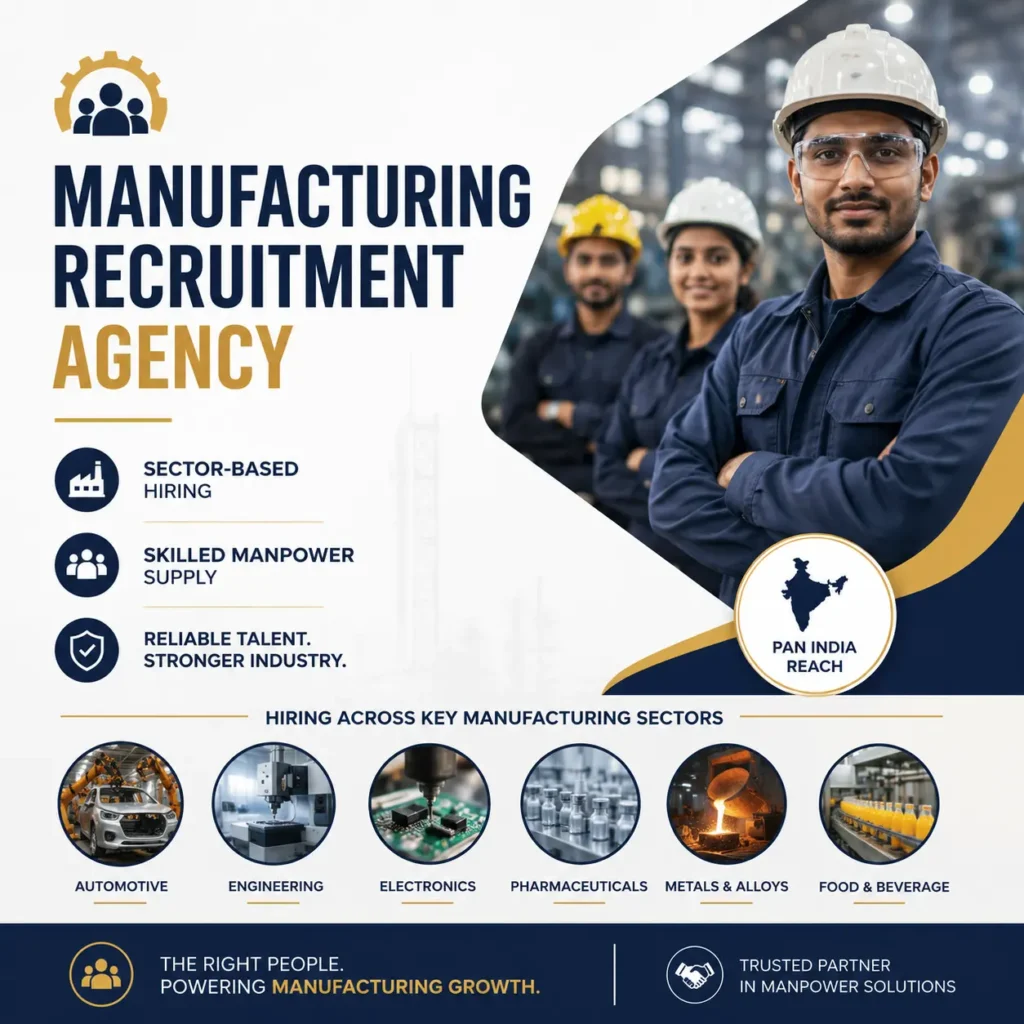
Viriksha HR Solution Manufacturing Recruitment Agency in India — Sector-Based Hiring and Skilled Manpower Supply Your Plant Runs on People. Are You Hiring the Right Ones? Every production target, quality benchmark, and delivery commitment your factory makes depends on one thing above everything else — the people running it. Not the machines. Not the process. The people. Yet for most manufacturing companies across India, hiring the right talent remains one of the most frustrating, time-consuming, and costly challenges they face year after year. Roles stay open for months. Shortlists are full of mismatched profiles. Promising candidates disappear mid-process. And the production floor feels every single day that a critical seat is empty. The reason this keeps happening is not a lack of talent in the market. It is a lack of the right hiring approach. Generic job portals were not built for manufacturing. General recruitment firms do not understand the difference between a process plant and a discrete manufacturing unit. And internal HR teams — however capable — are not equipped to run deep, targeted talent acquisition for specialized industrial roles while simultaneously managing compliance, payroll, and employee relations. This is where Viriksha HR Solutions steps in. As a dedicated manufacturing recruitment agency in India, we specialize in sector-based hiring and skilled manpower supply — connecting India’s best industrial talent with the companies that need them most. What Sector-Based Hiring Means and Why It Matters Most recruitment agencies treat manufacturing as one category. Viriksha HR treats it as twenty. Sector-based hiring means we understand that recruiting a Production Manager for an automotive Tier-1 supplier is fundamentally different from hiring one for a pharmaceutical plant or a food processing unit. The technical knowledge required is different. The certifications matter differently. The leadership context is different. The culture of the shop floor is different. When your hiring partner understands these nuances at a sector level, everything improves — the quality of the shortlist, the speed of the process, the accuracy of the match, and ultimately the performance of the hire on the job. This is the foundation of how Viriksha HR approaches sector-based skilled manpower hiring for manufacturing companies across India. Explore More Industries We Serve — Sector-Specific Talent Acquisition Automotive and Auto Components India’s automotive sector is one of the most demanding hiring environments in manufacturing. OEMs, Tier-1 and Tier-2 suppliers, and the rapidly expanding EV ecosystem all need experienced professionals who understand lean production systems, IATF 16949 quality standards, press shop operations, weld line management, and supplier development. Viriksha HR has an active talent pipeline built specifically for automotive manufacturing hiring — covering everything from Production Engineers and Quality Managers to Plant Heads and VP-level Operations leaders. Pharmaceuticals and Life Sciences Pharmaceutical manufacturing hiring demands a unique combination of technical knowledge and regulatory understanding. Whether it is a formulation facility, an API plant, or a medical devices unit, candidates must be familiar with GMP compliance, USFDA and WHO-GMP standards, validation protocols, and documentation systems. Our pharma manufacturing talent acquisition practice places Quality Assurance Managers, Production Pharmacists, Regulatory Affairs Specialists, Validation Engineers, and Plant Compliance Heads across India’s leading life sciences companies. Food and Beverage Manufacturing Food processing is one of India’s fastest-growing industrial sectors — and one of the most compliance-intensive. FSSC 22000, FSSAI regulations, HACCP implementation, cold chain management, and hygienic plant design are non-negotiables for talent entering this space. Viriksha HR recruits experienced food manufacturing professionals including Production Managers, Quality Heads, Plant Managers, and Operations Directors for FMCG companies, food processors, and beverage manufacturers across India. Plastics and Rubber From injection moulding and blow moulding to extrusion and rubber compounding, plastics and rubber manufacturing requires highly specialized process knowledge. Finding candidates who genuinely understand mould design, machine parameters, material science, and cycle time optimization is rare through general hiring channels. Our plastics and rubber sector hiring practice maintains a curated network of process engineers, production supervisors, tooling specialists, and plant managers across India’s polymer manufacturing belt. Textiles and Apparel Textile manufacturing talent acquisition spans a wide range — from spinning and weaving to garmenting and technical textiles. Understanding the production ecosystem of mills, the role of industrial engineers in efficiency improvement, and the compliance demands of export-oriented units requires a recruitment partner with genuine textile sector knowledge. Viriksha HR places Production Managers, Industrial Engineers, Quality Controllers, Compliance Officers, and Factory Managers for textile and apparel manufacturers across Tamil Nadu, Gujarat, and beyond. Electronics and Electrical Manufacturing Electronics manufacturing hiring is driven by precision, speed, and technical depth. PCB assembly, SMT operations, consumer electronics production, switchgear manufacturing, and EMS companies need professionals who combine technical rigor with strong production management capability. Our electronics manufacturing talent acquisition network covers Production Engineers, SMT Process Specialists, Quality Engineers, EHS Managers, and Operations Heads for electronics and electrical manufacturers across India. Heavy Engineering and Fabrication Steel fabrication, castings, forgings, pressure vessel manufacturing, and heavy equipment production demand professionals with deep domain knowledge and strong plant management credentials. These are not roles that can be filled through volume-based hiring — they require a precise, relationship-driven search approach. Viriksha HR’s heavy engineering recruitment practice places Welding Engineers, Fabrication Supervisors, NDT Inspectors, Production Managers, and Plant Heads for India’s engineering and capital goods manufacturers. Chemical and Petrochemical Chemical plant hiring involves strict safety and compliance requirements alongside deep process knowledge. Candidates for roles in specialty chemicals, paints, adhesives, agrochemicals, and petrochemical processing must combine technical expertise with strong EHS awareness and regulatory compliance understanding. Our chemical sector hiring practice covers Process Engineers, Production Managers, Safety Officers, Quality Managers, and Plant Operations Heads. Cement and Building Materials Cement, ceramics, glass, and construction materials manufacturing present unique hiring challenges — particularly in identifying professionals with kiln operations expertise, materials science backgrounds, and large plant management experience. FMCG and Consumer Goods Fast-moving consumer goods manufacturing demands speed, scale, and consistency. Viriksha HR supports FMCG manufacturing talent acquisition for companies that need Production Managers, Packaging Engineers, Supply Chain Leaders, and Operations Heads who can manage high-velocity production environments without
Payroll, PF and ESI Compliance Challenges Faced by Manufacturing Companies
Viriksha HR Solution Payroll, PF and ESI Compliance Challenges Faced by Manufacturing Companies 16-06-2026 Tuesday Why Compliance Is the Biggest Back-Office Burden in Manufacturing Running a manufacturing plant means managing machines, manpower, materials, and margins — all at once. But ask any plant HR or finance head and they will tell you there is one more thing quietly consuming their time and energy every single month: payroll and statutory compliance. PF filings. ESI deductions. Wage registers. Bonus calculations. Overtime reconciliation. Contractor compliance audits. The list does not end — and one missed deadline or miscalculation can trigger penalties, labour department notices, or worse, workforce unrest. This is why manufacturing payroll services in Chennai are no longer a luxury. For growing factories and industrial units, they are a practical necessity. The Unique Payroll Complexity Inside a Factory Manufacturing payroll is not like corporate payroll. It carries layers of complexity that generic software or a small HR team simply cannot handle reliably month after month. Here is what makes it harder: Multiple wage structures under one roof Skilled workers, semi-skilled workers, contract labour, trainees, and permanent staff all have different wage slabs, allowances, and statutory obligations. Shift-based attendance Three-shift operations, night shift allowances, weekly off rotations, and overtime calculations must feed accurately into payroll every cycle. High headcount with frequent changes New joinings, exits, transfers, and seasonal contract workers make every month’s payroll different from the last. Contractor workforce compliance Under the Contract Labour (Regulation and Abolition) Act, the principal employer carries liability if contractors default on PF, ESI, or minimum wages. Piece-rate and incentive structures Production-linked pay adds another calculation layer that most standard payroll tools are not built to handle cleanly. Miss any one of these and you are exposed — either to a compliance penalty or to a disgruntled workforce. ESI Services in Manufacturing — Common Pain Points ESI services for manufacturing carry their own set of complications. ESI applies to employees earning up to ₹21,000 per month and covers medical, maternity, disability, and dependent benefits. Where factories typically struggle: Identifying which workers cross the ₹21,000 threshold mid-year and managing the transition correctly Ensuring contract workers deployed at the factory are covered under ESI by the contractor — and verifying proof Handling ESI inspections and responding to notices without proper documentation Filing half-yearly ESI returns accurately and on time When ESI records are messy or incomplete, your company becomes a target during labour inspections — especially in industrial zones where enforcement is active. The Hidden Cost of Managing Compliance In-House Many mid-sized manufacturing companies try to manage payroll and compliance internally with a small HR team and basic software. This works — until it doesn’t. The hidden costs are real: Staff time lost to manual reconciliation instead of core HR work Penalties from filing errors that compound over time Legal fees when notices escalate Reputational risk with workers when wages are delayed or incorrect Audit exposure during factory inspections or due diligence Payroll outsourcing in Chennai for manufacturing units eliminates these risks by putting compliance in the hands of specialists who do nothing else. How Viriksha HR Handles This for Manufacturing Companies Viriksha HR has worked closely with manufacturing units across Chennai, Hosur, Coimbatore, and Sriperumbudur — understanding firsthand what factory payroll and compliance demands on the ground. What Viriksha HR delivers as a factory compliance service: Monthly Payroll Processing — Accurate salary computation across all worker categories including contract staff, with shift allowances, overtime, and incentives factored in correctly every cycle. PF and ESI Filing — Timely ECR filing, ESI returns, and challan generation handled on schedule so your company never misses a statutory deadline. Contractor Compliance Monitoring — Verification that your labour contractors are meeting their PF and ESI obligations, protecting you from principal employer liability. Wage Register and Statutory Register Maintenance — Form A, Muster Roll, Overtime Register, and other mandatory records maintained inspection-ready at all times. Notice and Audit Support — If your unit receives a labour department notice or faces a PF/ESI inspection, Viriksha HR provides documentation support and response assistance. New Joinee and Exit Compliance — UAN activation, ESI IP number generation, PF transfers, and full and final settlement compliance managed without delays. Who Benefits Most From Manufacturing Payroll Outsourcing Payroll outsourcing in Chennai makes the strongest case for: Factories with 50 to 500 employees managing multiple worker categories Units using contract labour where principal employer liability is a concern Companies expanding headcount rapidly and outgrowing their current HR capacity Plants that have received compliance notices and want to clean up their records going forward Promoters and plant heads who want payroll handled correctly without building a large internal compliance team Compliance Is Not Optional — But It Can Be Effortless Labour law compliance in manufacturing is non-negotiable. The EPFO and ESIC are tightening enforcement. Inspections are more frequent. Penalties are steeper. And workers today are more aware of their statutory rights than ever before. The smartest factories are not the ones trying to manage all of this internally while also running production. They are the ones partnering with specialists who make compliance invisible — handled correctly, on time, every time. Viriksha HR’s manufacturing payroll services in Chennai are built specifically for the industrial sector. Whether you need end-to-end payroll management or targeted support for PF and ESI compliance, the team is ready to step in and take the burden off your plate. Reach out to Viriksha HR today and turn compliance from a monthly stress into a solved problem.
How Manufacturing Companies Can Hire Production Managers, Plant Managers and Operations Heads Faster

Viriksha HR Solution How Manufacturing Companies Can Hire Production Managers, Plant Managers and Operations Heads Faster 16-06-2026 Tuesday The Hiring Gap in Manufacturing Is Real Walk into any manufacturing plant in Tamil Nadu today and ask the HR head about their biggest pain point. Nine out of ten will say the same thing — finding the right Production Manager, Plant Manager, or Operations Head is painfully slow, unpredictable, and expensive when done wrong. These are not roles you can afford to fill with guesswork. A wrong hire at this level delays production targets, disrupts shop floor discipline, and affects your bottom line within weeks. That is exactly why more industrial companies across Chennai, Coimbatore, Hosur, and Sriperumbudur are turning to a specialized manufacturing recruitment agency in Chennai rather than relying on generic job portals. Explore more Why Standard Hiring Methods Fall Short for These Roles When you post a Production Manager or Plant Manager opening on a job board, you get volume — not quality. You end up sifting through hundreds of applications where most candidates either lack the technical depth, haven’t managed large shop floor teams, or have no experience in your specific manufacturing vertical. Operations Manager recruitment is even more niche. You need someone who understands lean manufacturing, OEE metrics, vendor coordination, compliance, and cross-functional leadership — all at once. That profile rarely walks through your door on its own. The real talent is passive. They are already employed, performing well, and not scrolling job boards. Reaching them requires a targeted industrial recruitment service with genuine domain networks. What a Manufacturing Staffing Agency Does Differently A specialized manufacturing staffing agency does not just search — it maps. It understands: The difference between a batch production environment and a continuous process plant What qualifications matter for an automotive-tier supplier versus an FMCG manufacturer How to assess a Plant Manager candidate’s crisis handling and team leadership beyond what a resume shows Local talent pools across Chennai’s industrial corridors — from Ambattur to Oragadam This domain depth cuts hiring time dramatically. Instead of 60 to 90 days of open search, companies working with the right agency close these positions in 3 to 4 weeks on average. How Viriksha HR Solves This for Manufacturing Companies Viriksha HR has built a strong reputation as a trusted manufacturing recruitment agency in Chennai, placing mid-to-senior industrial professionals across Tamil Nadu and beyond. Here is how they make it faster and smarter: Real-World Hiring Successes Case 1 – Production Manager for an Auto Components Manufacturer in Hosur A Tier-1 automotive parts company needed a Production Manager with CNC machining expertise and team leadership experience for a 200-person shop floor. Generic hiring had failed for over two months. Viriksha HR shortlisted three qualified candidates within ten days. The position was filled in under three weeks with a candidate who had direct domain experience and significantly reduced rejection at the interview stage. Case 2 – Plant Manager for a Plastics Manufacturer in Chennai A mid-sized plastics processing company was scaling operations and needed a Plant Manager who could handle both production efficiency and compliance. Viriksha HR leveraged its passive candidate database and industry referral network to identify a candidate not actively job-hunting — but open to the right opportunity. Offer accepted within 18 days. Case 3 – Operations Head for a Food Processing Unit in Coimbatore For an Operations Manager recruitment assignment in the food processing sector, Viriksha HR screened for FSSC compliance knowledge, vendor management skills, and multi-shift leadership capability. The client received a curated panel of four candidates — all with relevant food industry backgrounds — and made a hire within 25 days. The Viriksha HR Hiring Process for Manufacturing Roles What makes Viriksha HR’s industrial recruitment services effective is a structured, no-shortcut approach: Deep Job Briefing Understanding your plant setup, team size, reporting structure, and the real problems this hire needs to solve Targeted Talent Mapping Going beyond active jobseekers to reach experienced professionals through referrals and sector-specific networks Technical Pre-Screening Candidates are assessed on domain knowledge, leadership competency, and cultural fit before your team ever speaks to them Faster Interview Cycles Coordinating scheduling and feedback loops so momentum isn’t lost Post-Offer Support Ensuring smooth joining and reducing last-minute drop-offs Who Should Partner With a Manufacturing Recruitment Agency? You should consider a specialized Plant Manager hiring partner if: Your last two or three recruitment attempts through portals ended without a strong hire You are expanding a plant and need leadership in place before operations scale You cannot afford a role to remain vacant beyond 30 days You need candidates from a specific manufacturing vertical — auto, pharma, food, textiles, or electronics Chennai’s Industrial Growth Demands Faster Talent Solutions Chennai and its surrounding industrial zones are among India’s most active manufacturing hubs. With companies investing in new plants, capacity expansions, and export-oriented production, the demand for experienced Production Managers, Plant Managers, and Operations Heads is only growing. The companies winning this talent race are not the ones waiting for the right resume to show up. They are the ones partnering early with a specialized manufacturing recruitment agency in Chennai that already knows where the talent is.
Payroll Outsourcing: Benefits, Process, and Business Impact
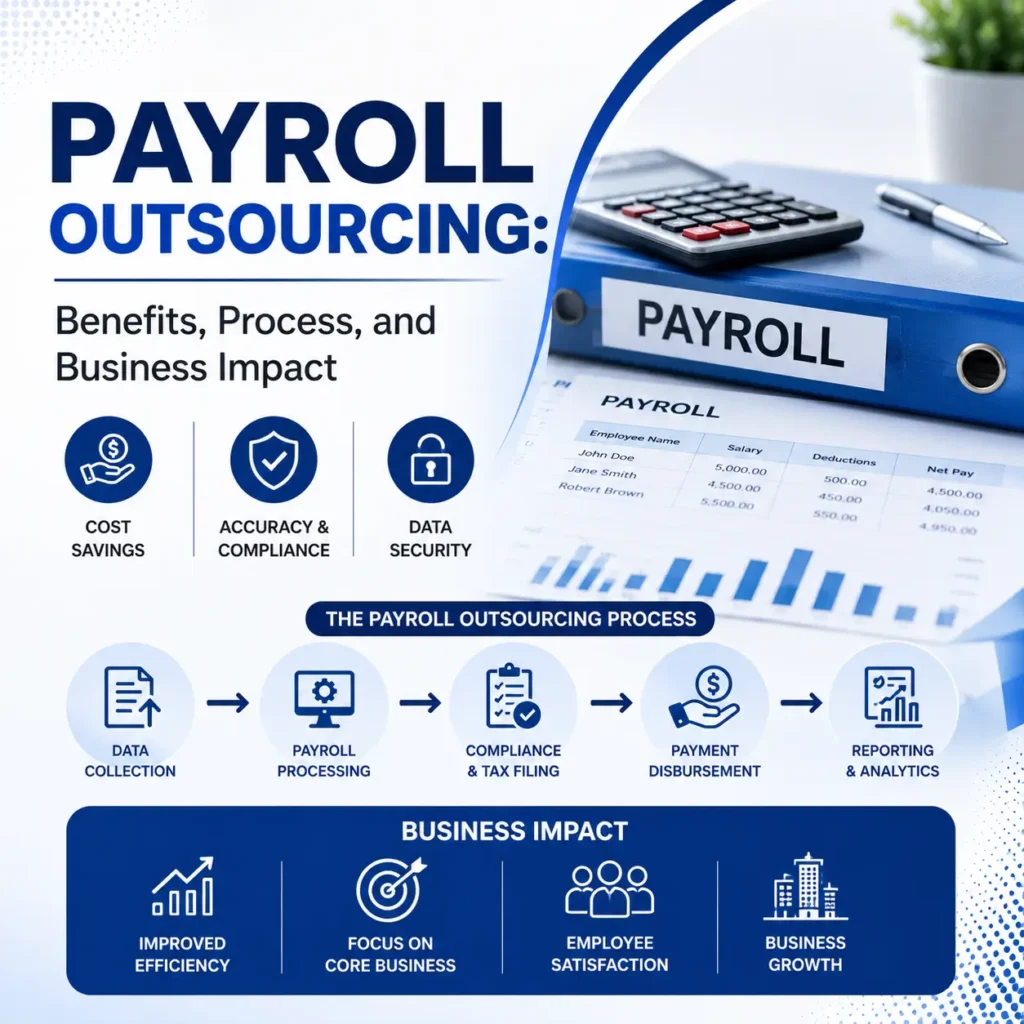
Viriksha HR Solution Payroll Outsourcing: Benefits, Process, and Business Impact Payroll Outsourcing: Benefits, Process, and Business Impact for Businesses in India 15-06-2026 Monday Payroll Outsourcing: Benefits, Process, and Business Impact for Businesses Payroll is the one HR function that every employee experiences directly — and the one function that cannot afford to be wrong. A salary paid late damages trust in ways that take months to rebuild. A statutory deduction calculated incorrectly creates a compliance liability that compounds with interest. A PF ECR that does not match the Wage Register triggers an EPFO inquiry. A missed ESI deadline attracts 12% per annum interest from day one. For most businesses in Chennai and across India, payroll is simultaneously the most important monthly process and the most resource-intensive one to manage correctly. It requires payroll accounting expertise, statutory compliance knowledge, deadline discipline, and the ability to manage exceptions — mid-month joiners, salary revisions, variable pay, full and final settlements — without errors that affect the routine payroll for everyone else. Payroll outsourcing is the decision to stop managing this complexity internally and engage a specialist provider who manages it completely — so the business gets accurate salaries, clean filings, maintained registers, and a compliance record that holds up to any scrutiny, every month, without consuming internal bandwidth. This guide covers everything businesses in India need to know about payroll outsourcing — the benefits, the process, the cost impact, the risks of getting it wrong, and how Viriksha HR Solutions delivers it across Chennai and Pan India. What Is Payroll Outsourcing? Payroll outsourcing is the engagement of a specialist external provider to manage the complete monthly payroll cycle — including salary calculation, statutory deduction computation, payslip generation, bank transfer file preparation, PF and ESI filing and remittance, Professional Tax payment, TDS management, statutory register maintenance, and monthly compliance reporting — on behalf of the client business. The distinction between payroll processing and payroll outsourcing matters. Payroll processing is the calculation of salaries. Payroll outsourcing is the management of the complete function — processing plus everything that surrounds it. A payroll processing vendor calculates salaries when you send them inputs. A payroll outsourcing partner reconciles attendance data before calculating, flags anomalies before processing, manages all statutory filings independently, maintains every required register, and provides a monthly compliance report confirming that every obligation has been met. For businesses in India, where payroll is directly connected to statutory obligations under the EPF Act, the ESI Act, the Income Tax Act, the Professional Tax legislation of every applicable state, and the Labour Welfare Fund Act — payroll outsourcing is not just an operational convenience. It is a compliance management decision. The Benefits of Payroll Outsourcing — Why Businesses Choose It Benefit 1 — Complete Statutory Compliance Without Internal Expertise India’s payroll compliance framework spans multiple central acts and state-specific legislation — each with its own calculation requirements, its own filing deadlines, and its own penalty regime. Managing all of it correctly requires expertise that most businesses do not have in-house — and cannot justify hiring in-house for the volume of work it involves. Payroll outsourcing provides access to that expertise as a service. The payroll outsourcing provider knows that PF must be calculated on basic wages and dearness allowance — not gross wages. They know that ESI must be calculated on total gross wages — including all allowances and overtime. They know that the TDS calculation must be revised when a bonus is paid. They know that the Professional Tax slab in Tamil Nadu is different from Karnataka is different from Maharashtra. And they implement all of this correctly every month — without the client having to know any of it or monitor any of it. Benefit 2 — Deadline Discipline That Never Slips The statutory deadlines attached to payroll are fixed and unforgiving. PF ECR by the 15th. ESI challan by the 15th. TDS deposit by the 7th. Form 24Q within 31 days of quarter end. Late payment of PF contributions attracts interest at 12% per annum under Section 7Q — plus damages under Section 14B that can reach 25% of the arrear amount per annum. Late ESI remittance attracts 12% per annum interest. Late TDS deposit attracts 1.5% per month. A business that manages payroll internally will miss a deadline eventually — when the payroll executive is on leave, when the bank has a technical issue, when inputs arrive late, or simply when the process has too many manual steps to complete before the deadline every single month. A payroll outsourcing provider manages deadlines as a core function — with internal target dates set five working days before every statutory deadline, backup processes for every step, and a compliance calendar that tracks every obligation for every client across every applicable state. Benefit 3 — Statutory Registers Maintained as Standard The most significant gap between a payroll software vendor and a genuine payroll outsourcing provider is statutory register maintenance. Most payroll software calculates salaries and generates payslips. It does not maintain the Wage Register, Muster Roll, Leave Register, Overtime Register, Employee Register, and Holiday Register in the prescribed format required by the Tamil Nadu Shops & Establishments Act and applicable central labour laws. These registers are what a labour inspector asks for first. A business whose registers are not maintained — or not maintained correctly — faces a notice during an inspection regardless of how current its PF and ESI filings are. Register maintenance must be part of the payroll outsourcing scope — not an optional add-on. Benefit 4 — Management Bandwidth Recovered The internal cost of payroll management is almost always understated — because it includes management time that does not appear on a payroll budget. The HR executive who spends three days processing payroll every month, the finance manager who reviews and approves it, the director who fields the compliance query from EPFO, the founder who handles the salary dispute because the HR executive is already at capacity — all of this management